According to the International Competition Jury, this year’s best international science documentary is Nuisance Bear. The winner of the Sundance Grand Jury Prize is a fascinating dive into the not so easy coexistence between people and polar bears, merging an entirely modern formal approach with such important topic. The Special Mention went to the film Out of Plain Sight in which the filmmakers follow an investigation into the disposal of toxic nuclear waste on the coast of California and its lasting impact on the human body. Lastly, the Jury handed the Best Science Communication Award to Phenomena, a documentary that captures chemical reactions and physical phenomena invisible to the naked eye and demonstrates how a film can serve as a medium for facilitating what usually stays out of our reach.
The Czech & Slovak Competition offered a wide range of diverse topics as well, with three prizes being awarded by the Jury. The Best Czech & Slovak Film Award was given to Tomáš Elšík’s documentary film Resilience. This audiovisually unique ballad tells the story of people who dedicated their life to taking care of the Czech landscape. Robin Kvapil received the Special Mention with his film Smoke about the topic of punishment for growing cannabis, as the name hints. Finally, the Best Science Communication Award was handed to Stone Age Voyagers, which is another film produced by the Czech Television. The archaeological-slash-history film documents the experiment of Czech archaeologist Radomír Tichý and his effort to re-enact a farmers’ voyage across the Aegean Sea.
The main prize in the Short Film Competition went to The Last Observers. Its director Maja K. Mikkelsen created a loving portrait of her parents, the last weather observers in Sweden, showing their affection for one another as well as their passion for a particular scientific field.
The Immersive Media Competition facilitates science popularisation through interactivity. The Special Mention was given to the project MAMLAS-1, an interactive game/puzzle which makes you learn how to drive a vehicle on the surface of a remote planet to collect mineral samples. To play this game, one has to accommodate to something completely new. The Best Immersive Project Award belongs to the project Out of Nowhere that puts us in the position of a woman who lives in a picturesque town in the Austrian Alps. In 2021, it was here where something unprecedented occurred – destructive floods. The project is an important ecological warning about the ongoing climate crisis that changes the weather and our surroundings with it.
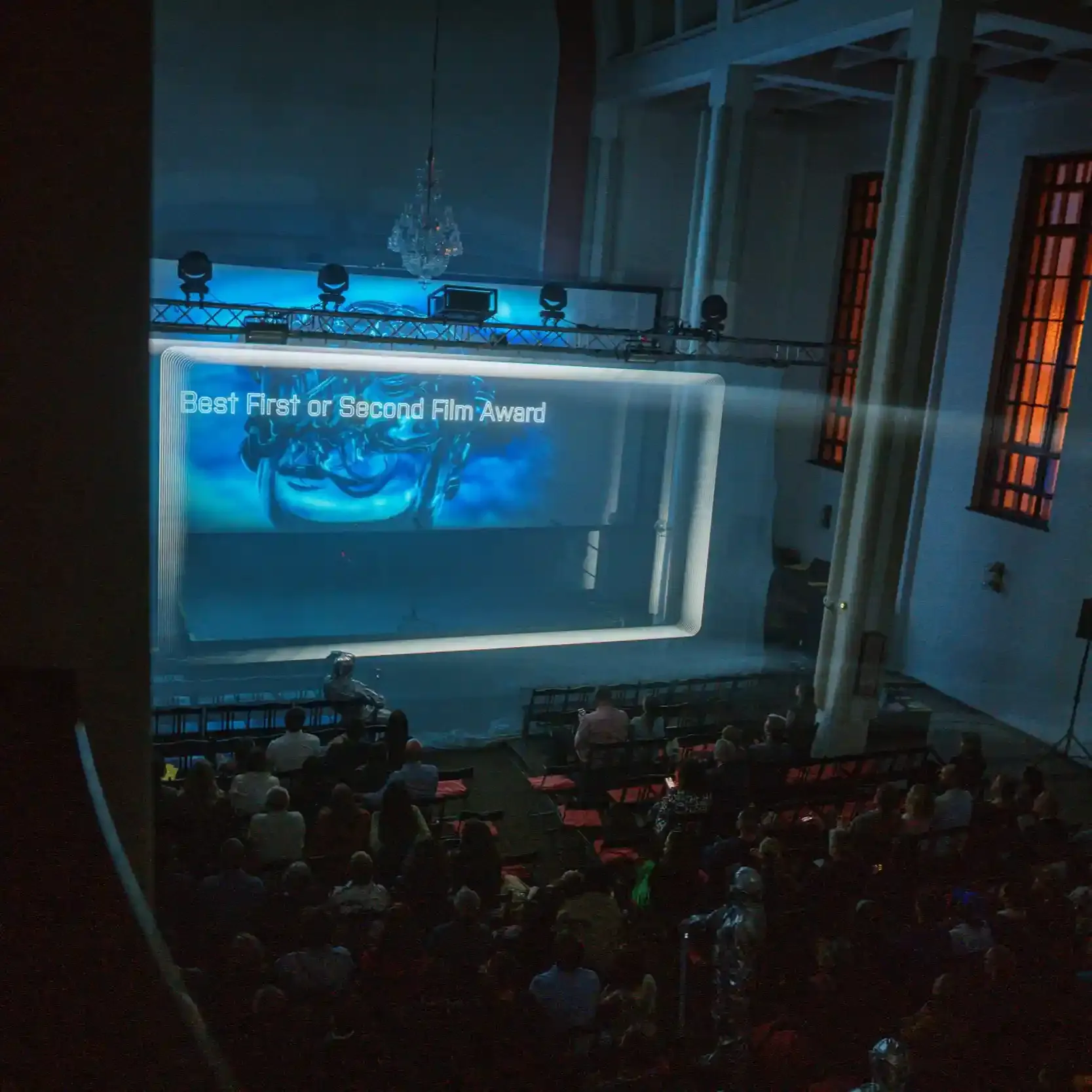
The Best First or Second Film Award was handed to the film Snow Leopard Sisters. In the Tibetan region of Dolpo, the director trio follows two women who embody the clash between generations and stances towards the predatory leopards, out of which only a few dozen remain.
The Student Jury Award was won by Menopause Mystery, a destigmatising documentary film that was included in the International Competition, as well as the non-competition section Diagnosis: Unknown. Moreover, the European Spotlight Award has been awarded for the first time. This section focused on trends and ways in which European documentary films communicate science, Killing Time: Science of Boredom being its winner. How does today’s society deal with boredom and what causes it?
And what about the audience’s vote? As in the case of the Best Science Communication Award in the International Competition, the Audience Award Powered by Czech Television belongs to Phenomena.
Like every year, Sandbox Films awarded the best projects featured in the Camp 4Science programme, Near Life and The Great Seagull Film winning this time around. The first project is about near-death experiences and toes the line between science and spirituality, while the second one inquires into the relationship between the man and nature by observing the coexistence of people and seagulls.
Last but not least, AFO’s Outstanding Contribution to Science Communication Award went to the Czech Society of Ornithology, nicely correlating with the winner of the Czech & Slovak Competition Resilience – a film produced in close cooperation with this institution.
The 61st AFO has brought a ton of exquisite films. This is a list of those which resonated the most with the Juries and reflect the trends in how contemporary cinematography approaches popularisation and communication of scientific research.